Gluten
Gluten is the stretchy, elastic network that forms when the proteins in wheat flour meet water and are worked together. It traps the gases produced during fermentation, which is what lets dough rise and gives bread its satisfying chew. Develop it fully and you get airy, structured loaves; keep it minimal and you get tender, delicate cakes.
What it is
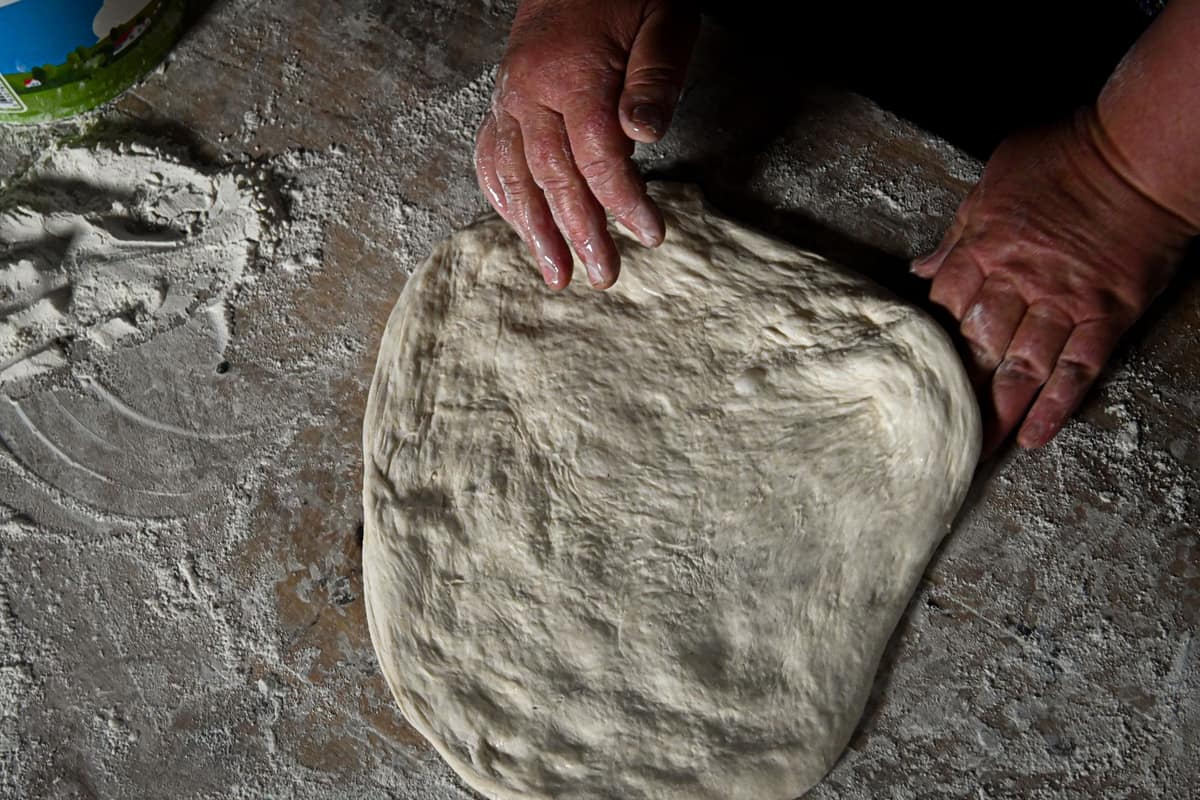
Gluten forms from two wheat proteins — glutenin and gliadin — that, on their own, do very little. They activate the moment flour meets water, linking up into a web that stretches like a balloon skin. Kneading aligns those proteins into a strengthening network of chains, and it is that alignment that gives dough its stretch: the more you work it, the more organised and elastic the web becomes, which is why bread dough goes from shaggy and tearable to smooth and springy under your hands. The classic sign that gluten is well developed is the windowpane test — stretching a piece of dough until it forms a thin, translucent film without tearing.
Why it matters
Gluten is the difference between chewy and tender. Bread wants a strong network to hold fermentation gases and build an open, springy interior, so bakers choose higher-protein bread flour and knead with intent. Cakes want the opposite: lower-protein cake flour, gentle mixing, and fat and sugar running interference so the crumb stays soft. Same family of flours, completely different destinations.
Common mistakes
Overmixing cake or muffin batter is the classic one — the batter turns glossy and elastic, and the bake comes out tough with tunnels running through it. On the bread side, the opposite: underworked dough that tears instead of stretching, then bakes flat because the network could not hold its gas. A good sensory check for bread dough is whether it stretches thin enough to let light through without ripping.
At Love Made Edible
Our sourdough loaf leans on well-developed gluten built through slow fermentation and gentle handling rather than aggressive machine kneading — it is what gives the loaf its chew and open interior.
Frequently Asked Questions
What is the difference between bread flour and cake flour?
Protein content, conceptually. Bread flour carries more of the gluten-forming proteins, so it builds a strong, chewy network — ideal for loaves. Cake flour carries less, so even with mixing it stays tender. Using bread flour in a cake tends to give a tougher, chewier result than intended.
Why did my cake turn out chewy and tough?
Almost always overdeveloped gluten. Mixing the batter too long or too vigorously after the flour goes in builds the same elastic network bread relies on — great in a loaf, unwelcome in a cake. Fold just until the flour disappears and stop.
Is gluten vegetarian?
Yes — gluten is purely a wheat protein, so it is entirely plant-based and vegetarian. People with coeliac disease or gluten sensitivity need to avoid it, but that is a medical consideration, not a dietary-classification one.
Tastethetechnique
Everything in our kitchen is baked fresh to order — eggless and vegan variants available.