Autolyse
/AW-toh-leez/
Autolyse is a rest given to just-combined flour and water before the rest of the mixing begins. During the pause, the flour hydrates fully and enzymes begin developing gluten on their own — so the dough arrives at kneading already partway built, needing less work and yielding a more extensible, better-flavoured loaf.
Builds on
What it is
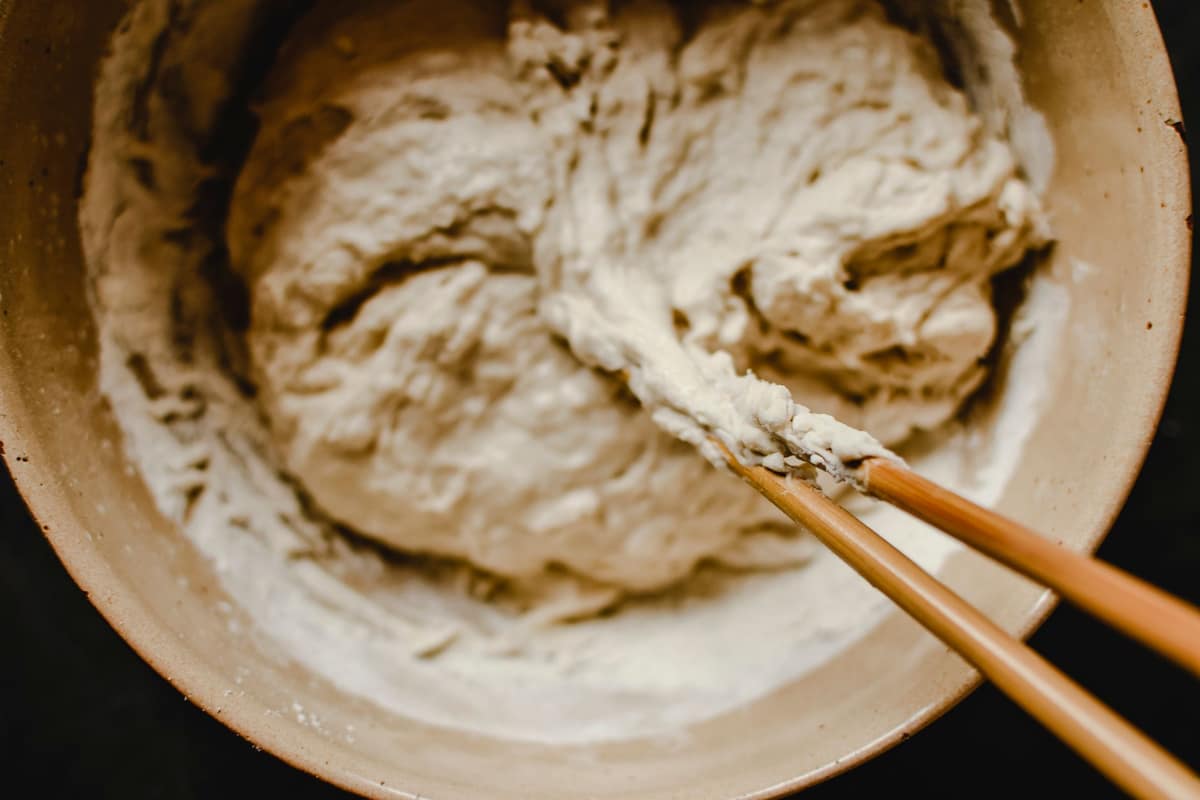
The word means 'self-breakdown', and that's what happens: once flour meets water, its own enzymes get to work, loosening proteins so they can link into gluten and freeing sugars that will later feed fermentation and browning. All the baker does is combine flour and water roughly and walk away — typically before salt or leaven joins, since both slow the process.
Why it matters
Dough that has autolysed needs noticeably less kneading, which means less oxidation and better flavour and colour in the crumb. It also becomes more extensible — it stretches without fighting back — which helps bakers shape loaves with an open, airy interior. It's a cornerstone of the less-work, more-time philosophy behind artisan bread.
Common mistakes
Treating it as optional stirring time rather than a true rest — the benefit comes from leaving the dough alone. Adding salt at the start, which tightens the gluten and blunts the effect. And expecting a smooth dough at the end of the rest: autolysed dough still looks shaggy, but it feels dramatically more cohesive and stretchy than it did when mixed.
At Love Made Edible
Our sourdough loaves begin with a proper autolyse — much of their open crumb and depth of flavour is built during that quiet rest, not during mixing.
Related terms
Frequently Asked Questions
What does autolyse do to dough?
It lets flour hydrate fully and its enzymes begin gluten development before any kneading. The dough that emerges is more extensible and needs less mixing, which preserves flavour and colour and makes an open crumb easier to achieve.
Does autolyse include salt and yeast?
The strict classical version is flour and water only — salt tightens gluten and slows the enzymes, and leaven starts fermentation early. Many bakers bend the rule for practical reasons, but if you want the full effect, hold the salt back until after the rest.
Is autolyse the same as no-knead bread?
They share a philosophy — letting time develop gluten instead of muscle — but they're different techniques. Autolyse is a defined rest before mixing continues; no-knead methods stretch the same idea across the entire fermentation, replacing kneading almost entirely with long rests and occasional gentle handling.
Tastethetechnique
Everything in our kitchen is baked fresh to order — eggless and vegan variants available.