Kneading
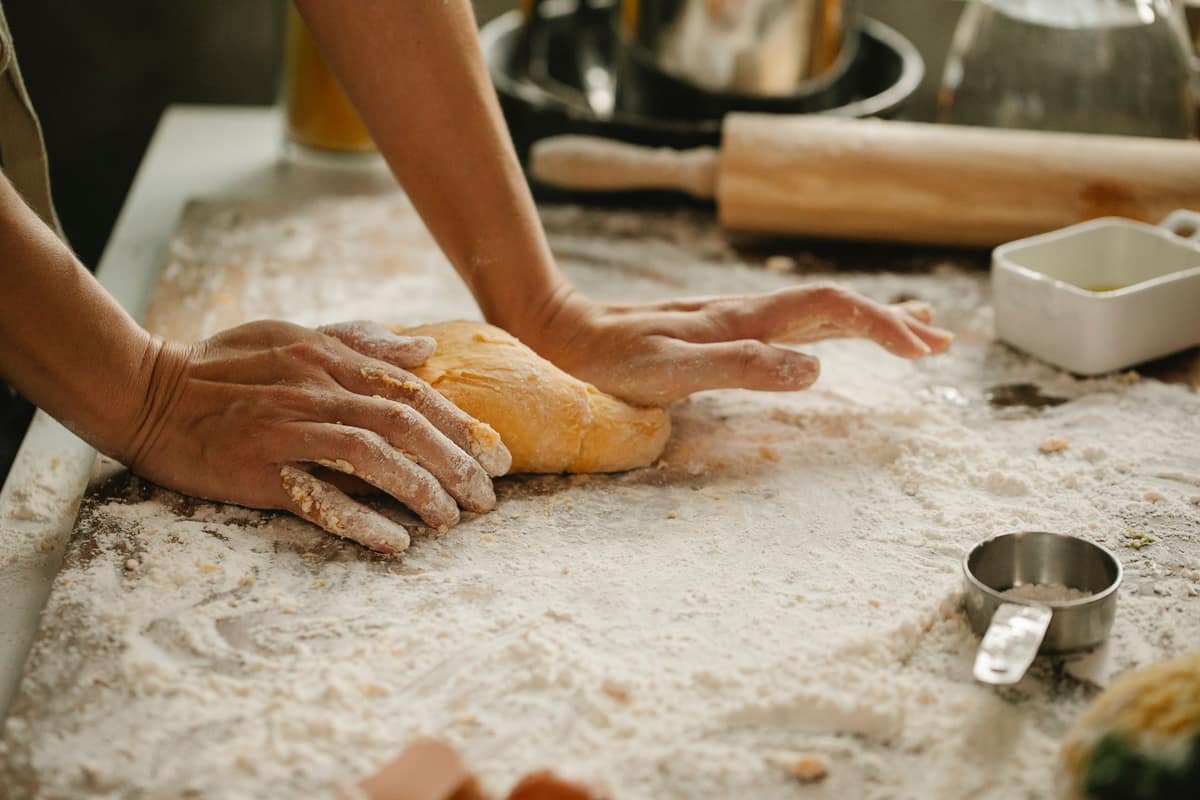
Kneading is the rhythmic working of dough — stretching, folding and pressing — that organises gluten proteins into a strong, elastic network. That network traps the gas produced during fermentation, letting bread rise instead of collapsing. It transforms a shaggy, sticky mass into a smooth, springy dough that holds its shape.
Builds on
What it is
Flour contains proteins that, once wet, link up into gluten strands. Kneading repeatedly stretches and realigns those strands so they weave into an organised, elastic web rather than a random tangle. You can feel the change under your hands: the dough goes from rough and tearing to smooth, supple and slightly tacky.
Why it matters
The gluten network is the balloon skin of bread. A well-developed network stretches around fermentation gases and holds them, giving an open, chewy crumb. A weak one leaks gas, producing dense, crumbly loaves that never quite rise.
Common mistakes
Under-kneaded dough tears when stretched, feels lumpy and slumps rather than springing back. Over-kneading — rare by hand but easy in a stand mixer — leaves dough tight, hard to shape, and eventually slack and sticky as the network breaks down. The windowpane test is the classic way to check you're in the sweet spot.
At Love Made Edible
Our sourdough loaves rely on careful, restrained dough development — enough strength to hold an open crumb, never so much that the bread turns tough.
Frequently Asked Questions
How do I know when dough is kneaded enough?
Look and feel: the surface turns smooth and slightly glossy, the dough springs back when poked, and it holds its shape instead of spreading. For a definitive check, use the windowpane test — a small piece should stretch thin enough to see light through without tearing.
Can you over-knead dough?
By hand it's very unlikely — your arms give out first. In a stand mixer it's possible: the dough first becomes tight and difficult, then the gluten network starts to break and it turns slack, sticky and shiny. At that point the structure can't be rebuilt.
Does all dough need kneading?
No. Gluten also develops on its own during long rests — techniques like autolyse and slow fermentation let time do much of the work. Many artisan breads use minimal handling and rely on rest instead of muscle.
Tastethetechnique
Everything in our kitchen is baked fresh to order — eggless and vegan variants available.