Hydrocolloids
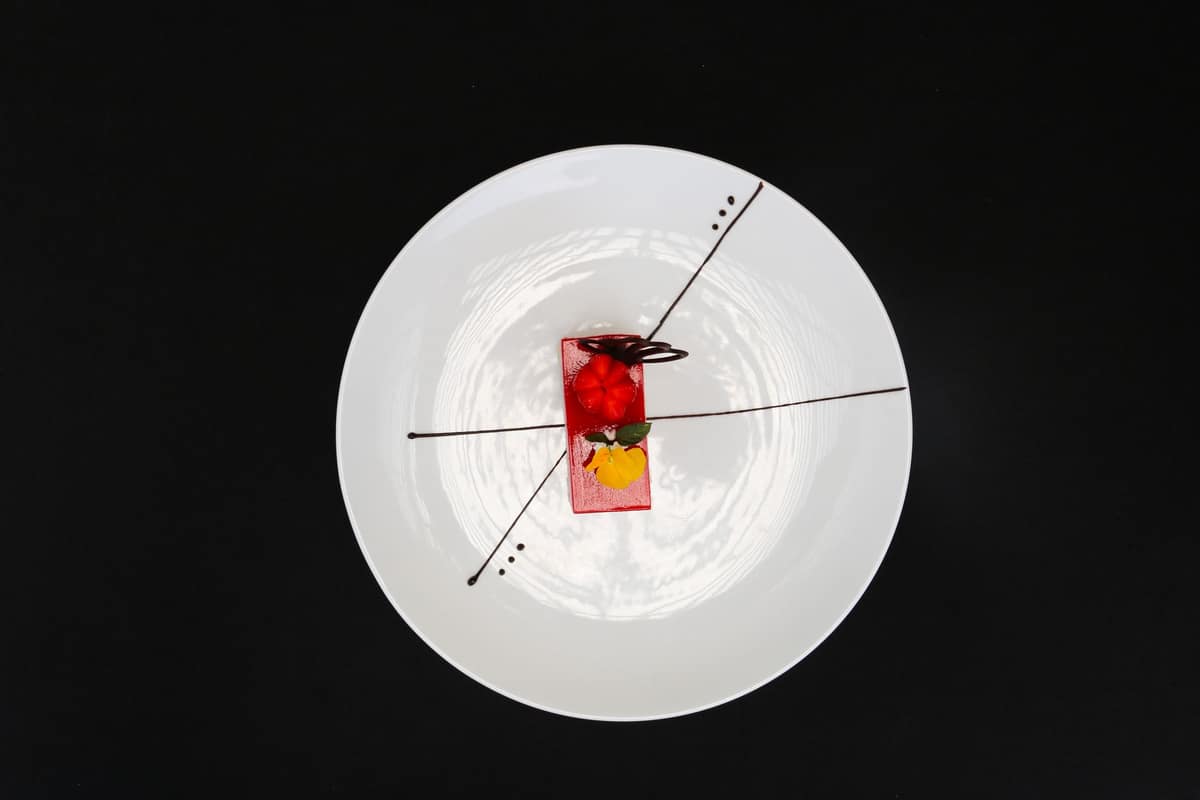
Hydrocolloids are a family of ingredients that grab hold of water and turn it thick or set it into a gel. Gelatin, agar-agar, pectin and xanthan gum all belong to this family. Modern patisserie uses them to design texture precisely — glossy glazes, clean-setting jellies, stable mousses — reaching far beyond what plain cornflour can do.
What it is
The name simply describes what they do: 'hydro' for water, 'colloid' for the way they disperse through it. Each is a long-chain molecule — many drawn from plants or seaweed, gelatin from animal collagen — that loves water and, once hydrated, either thickens a liquid or knits it into a gel. Tiny amounts do dramatic work, which is why professionals weigh them so carefully.
Why it matters
Hydrocolloids are how a pastry chef designs texture rather than merely achieving it. They let a fruit glaze pour glossy and then set with a clean shine, hold a mousse light and stable through a warm day, keep a sorbet smooth, or give a jelly a delicate wobble or a firm slice on demand. In a warm, humid climate like Bangalore's, that control over set and stability is genuinely useful.
The main players
Gelatin sets soft and melts in the mouth, but comes from animal collagen, so it is not vegetarian. Agar-agar, drawn from seaweed, sets firmer and holds up in the heat, and is the vegetarian setter of choice — familiar in Indian kitchens as china grass. Pectin, from fruit, gives jams and glazes their set, while xanthan gum thickens and stabilises without gelling. Each brings a different feel.
Common mistakes
Treating them as interchangeable is the classic trap — swapping agar for gelatin measure-for-measure gives a brittle, weepy set instead of a tender one, because they behave nothing alike. Each also has its own way of being brought to life: some need soaking, some need boiling to activate, some need to be dispersed dry before liquid goes in. Skip the right step and the gel simply never forms, or forms lumpy.
Related terms
Frequently Asked Questions
What are hydrocolloids in cooking?
Hydrocolloids are ingredients that bind water to thicken or gel it. The family includes gelatin, agar-agar, pectin and xanthan gum. Cooks and pastry chefs use them to control texture — setting jellies, stabilising mousses, thickening sauces and giving glazes their shine — usually in very small amounts relative to the dish.
Is agar-agar the same as gelatin?
No — they do similar jobs but are quite different. Gelatin comes from animal collagen, sets soft and melts on the tongue, and is not vegetarian. Agar-agar comes from seaweed, sets firmer, tolerates heat better and is fully vegetarian, which is why it is the usual choice in Indian and eggless kitchens, where it is often sold as china grass.
Why do pastry chefs use hydrocolloids instead of cornflour?
Cornflour thickens, but it can only do so much: it clouds, it can taste starchy, and it will not hold a clean gel or a stable set. Hydrocolloids let a pastry chef choose exactly the texture they want — a mirror glaze, a sliceable jelly, a mousse that survives a warm room — with a precision and clarity that starch alone cannot match.
Tastethetechnique
Everything in our kitchen is baked fresh to order — eggless and vegan variants available.