Pectin
Pectin is a natural setting agent found in the cell walls of fruit, most abundant in apples and citrus peel. It is what makes jam gel, glazes cling, and pâte de fruit hold its jelly-like bite. Being plant-derived, it is naturally vegetarian and vegan-friendly.
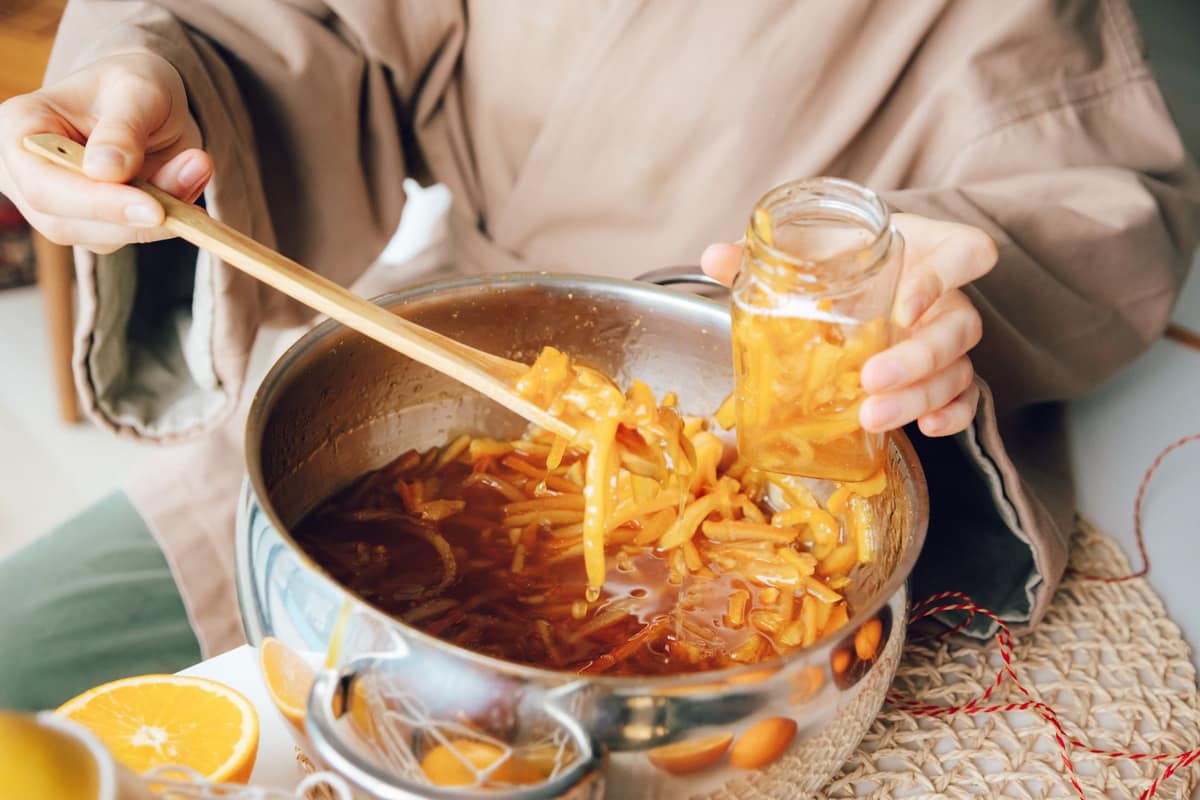
What it is
Pectin is a fibre that fruit uses to hold its structure. Cooked with sugar and acid, it forms a mesh that traps liquid and turns a runny fruit mixture into a set gel. Some fruits are rich in it, while low-pectin fruits often need a helping hand to set at all.
Why it matters
Pectin is the quiet workhorse behind jams, jellies, fruit glazes, and the firm, sliceable squares of pâte de fruit. It sets with a soft, clean bite that melts on the tongue, quite different from the rubbery set of some other gelling agents, and it keeps fruit flavour bright.
Not all pectin is the same
Different types of pectin behave differently: some need plenty of sugar and acid to set, while others gel with much less and even respond to calcium instead. Choosing the wrong type, or the wrong balance of sugar and acid, leaves a preserve either runny or unpleasantly stiff.
Related terms
Frequently Asked Questions
Is pectin vegetarian?
Yes. Pectin is extracted from fruit, usually apples or citrus peel, so it is naturally vegetarian and vegan. This makes it a popular plant-based setting agent, unlike gelatin, which is animal-derived and non-vegetarian.
What is the difference between pectin and gelatin?
Pectin comes from fruit and sets fruit-based mixtures with a soft, clean bite, usually with sugar and acid. Gelatin comes from animals and sets a wobbly, melt-in-the-mouth gel. They are not interchangeable, and only pectin is vegetarian.
Tastethetechnique
Everything in our kitchen is baked fresh to order — eggless and vegan variants available.