Spherification
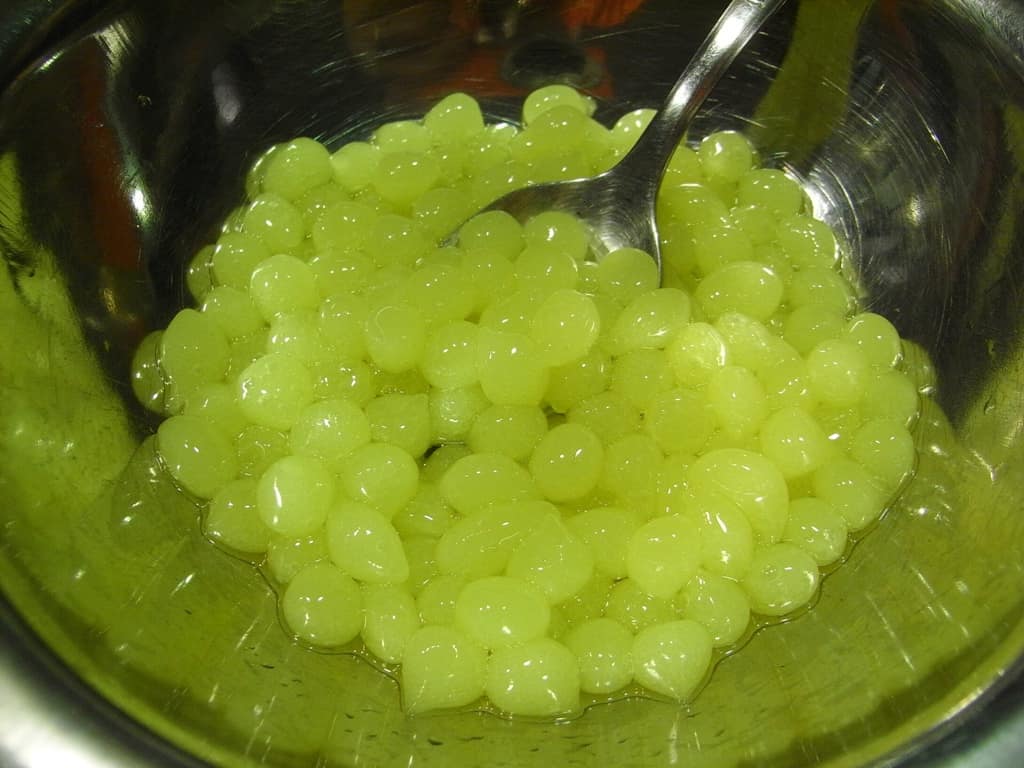
Spherification is a molecular-gastronomy technique that turns flavoured liquids into delicate spheres with thin gel skins and liquid centres — think caviar-like pearls that burst on the tongue. It works by letting an alginate, a seaweed-derived gelling agent, react with calcium exactly where the liquid's surface meets a setting bath.
Builds on
What it is
Sodium alginate stays fluid on its own but gels instantly on contact with calcium. Spherification exploits that meeting point: droplets of one liquid fall into a bath of the other, and a gel membrane forms only at the surface, sealing a still-liquid centre inside. In basic spherification the alginate is in the flavoured liquid and calcium in the bath; reverse spherification flips them, with the calcium-rich liquid dropped into an alginate bath.
Why it matters
The payoff is theatre and contrast: a sphere that looks solid, holds its shape on the spoon, then bursts into pure liquid flavour. In pastry it appears as fruit 'caviar' on plated desserts, yolk-like mango spheres, and bubble-tea-style pearls. Reverse spherification matters because it suits dairy and calcium-rich liquids and produces spheres that stop thickening — basic spherification's skins keep firming until the whole pearl eventually gels solid.
Common mistakes
Trying to spherify very acidic liquids, which stop alginate gelling until buffered. Forgetting the rinse — spheres carried straight from the bath taste of it. Letting basic-method spheres sit too long, so the promised liquid burst turns to gumminess. And treating it as a shortcut: spherification rewards precision and patience more than almost anything else in the pastry kitchen, which is why it sits at the far end of the difficulty scale.
Frequently Asked Questions
What is spherification in simple terms?
It's a way of turning a flavoured liquid into small spheres with a thin gel skin and a liquid middle. A seaweed-derived gelling agent (alginate) and calcium gel the instant they touch, so a skin forms only at the droplet's surface — a pearl that bursts when eaten.
Basic vs reverse spherification — what's the difference?
In basic spherification the alginate goes into the flavoured liquid, which is dropped into a calcium bath; the skin keeps thickening over time, so spheres must be served fresh. Reverse spherification puts the alginate in the bath instead — it suits dairy and calcium-rich liquids, and the spheres stay liquid-centred once rinsed.
Is spherification vegetarian?
Generally yes. Alginate comes from seaweed and the calcium salts used are mineral-based, so no animal-derived ingredients are involved — unlike gelatin-based techniques. As always, the finished dish's other components decide its overall status.
Tastethetechnique
Everything in our kitchen is baked fresh to order — eggless and vegan variants available.