Cold Retardation
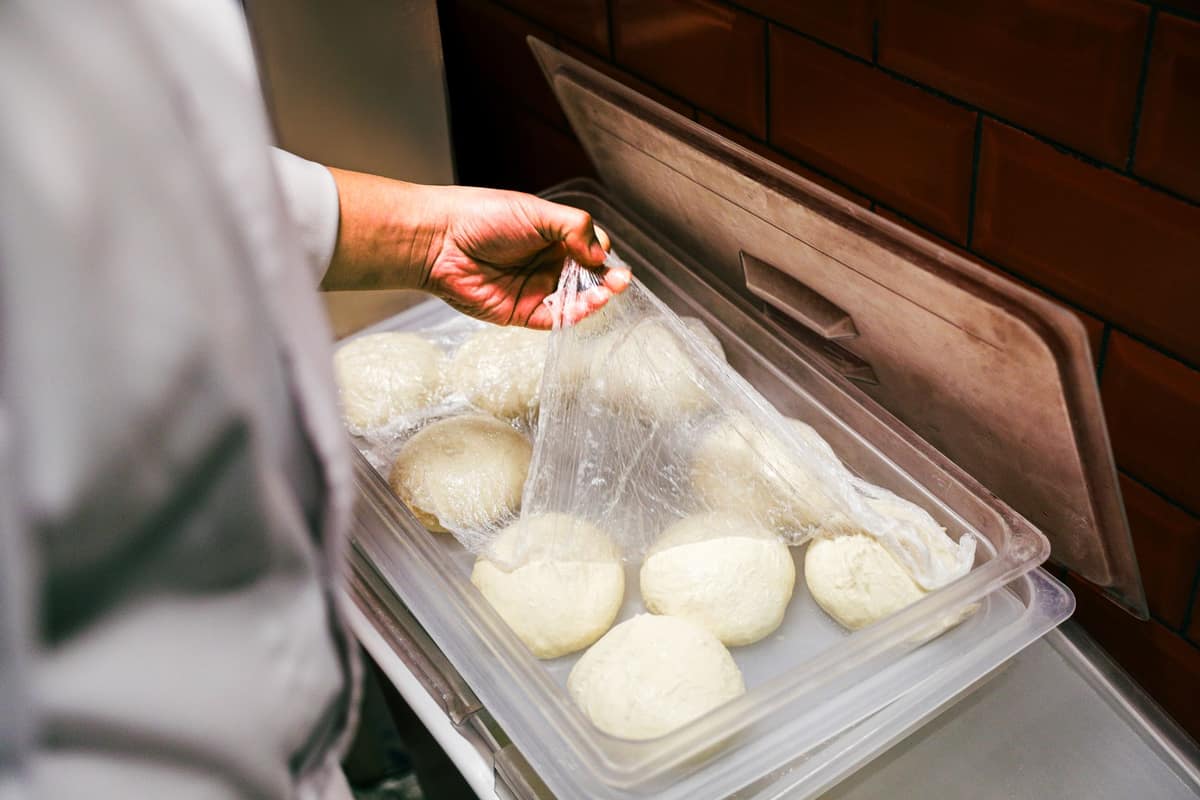
Cold retardation is the deliberate slowing of dough fermentation by refrigerating it, often overnight. Yeast activity drops sharply in the cold while flavour-building enzymes and bacteria keep working, so the dough gains complexity without over-proofing. It's how serious bakeries get deep flavour and a workable schedule at the same time.
Builds on
What it is
Fermentation is a race between different processes, and cold changes who's winning. Chilled, the yeast slows to a crawl and gas production nearly stops — but enzymes go on breaking starch into sugars, and bacteria continue producing the acids that give fermented dough its depth. The dough effectively marinates in its own developing flavour instead of racing toward over-proofed collapse.
Why it matters
Retarded doughs taste noticeably more complex — a gentle tang, deeper wheat flavour, better crust colour from the extra sugars. The practical win is just as large: a baker can mix in the evening and bake fresh in the morning, and cold dough is firmer and far easier to handle, shape and score. In a warm Bangalore kitchen, the fridge is also simply the only reliable way to slow an eager dough down.
Common mistakes
Leaving dough uncovered so the surface dries into a skin that bakes as a pale, tough streak. Expecting cold dough to behave like room-temperature dough straight from the fridge — some doughs bake beautifully cold, but others want a short wake-up first; the recipe's intent matters. And retarding an already over-proofed dough: the fridge slows fermentation, it doesn't rewind it.
At Love Made Edible
Our sourdough loaves ferment slowly in the cold overnight — the gentle tang and blistered, deeply coloured crust are direct results of that long, cool rest.
Related terms
Frequently Asked Questions
What does retarding dough mean?
It means slowing fermentation by putting the dough in the fridge, usually overnight. The yeast nearly pauses while flavour-building processes continue, so the dough develops complexity without over-proofing — and the baker gains control over timing.
Why do bakeries ferment bread overnight?
Two reasons: flavour and schedule. A long cold ferment builds acids and aromas that quick doughs never develop, and it lets bread be mixed one day and baked fresh early the next. The firm, cold dough is also easier to shape and score cleanly.
Does cold dough need to come to room temperature before baking?
It depends on the bread. Many artisan loaves — sourdough especially — are baked straight from the fridge, since cold dough holds its shape and scores beautifully. Softer enriched doughs more often want time to warm and finish their rise. Follow the recipe's intent rather than a universal rule.
Tastethetechnique
Everything in our kitchen is baked fresh to order — eggless and vegan variants available.