Lamination
Lamination is the technique of enclosing a sheet of butter in dough, then repeatedly rolling and folding to build many alternating layers of dough and fat. In the oven, the butter's water turns to steam and forces the layers apart — creating the shattering, honeycombed flakiness of croissants and puff pastry.
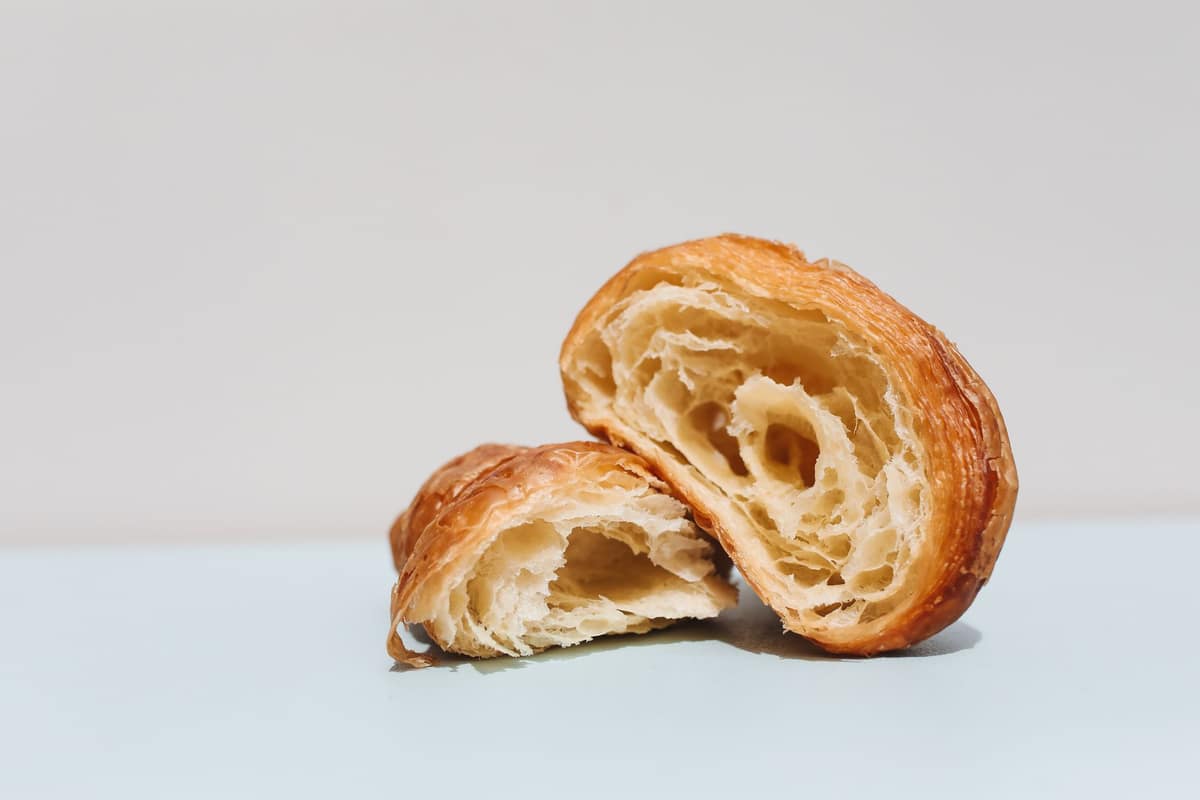
What it is
A slab of butter is locked inside a dough envelope, and the package is rolled out and folded over itself, again and again with rests in between. Each fold multiplies the layers, until paper-thin sheets of dough alternate with equally thin sheets of butter. The whole craft lives in keeping those layers distinct — cold enough that the butter never melts into the dough, pliable enough that it never shatters within it.
Why it matters
The layers are the leavening. When laminated dough hits the oven, water in each butter sheet flashes into steam and shoves the dough layers apart before the structure sets — that's the lift, the honeycomb crumb and the audible shatter of a good croissant. No lamination, no flake; a smeared, broken lamination gives bready, greasy pastry instead.
Why it takes days
Butter and dough want to be at different consistencies, and the only mediator is temperature and time. The dough must rest between rolls so its gluten relaxes, and the whole package must be chilled repeatedly so the butter stays a solid, flexible sheet — especially challenging in a warm Bangalore kitchen, where a few minutes too long on the bench turns butter to grease. That's why honest croissants are a multi-day project, not an afternoon one.
Related terms
From the journal
Frequently Asked Questions
What is laminated dough?
It's dough built from many alternating layers of dough and butter, made by enclosing butter in dough and repeatedly rolling and folding. Croissants, puff pastry and Danish pastries are all laminated — the layers are what create their flakiness.
Why do croissants take days to make?
Because both the butter and the gluten need repeated rests. The butter must stay cold and pliable between every roll, and the dough must relax or it fights back and tears. Layer in fermentation time for flavour, and a properly made croissant is a project measured in days.
Why did my laminated pastry turn out bready or greasy?
Usually the layers were lost. If butter gets too warm it smears into the dough and the pastry bakes up bready; if it's too cold it cracks into shards, breaking the sheets, and the fat leaks out greasy in the oven. The butter should bend with the dough — cold, but never brittle.
Tastethetechnique
Everything in our kitchen is baked fresh to order — eggless and vegan variants available.