Folding
Folding is the gentle mixing technique used to combine a light, airy mixture — whipped cream, beaten egg whites — with a heavier one without knocking out the air. Instead of stirring in circles, you sweep a flexible spatula down, across and up over the top, turning the bowl as you go.
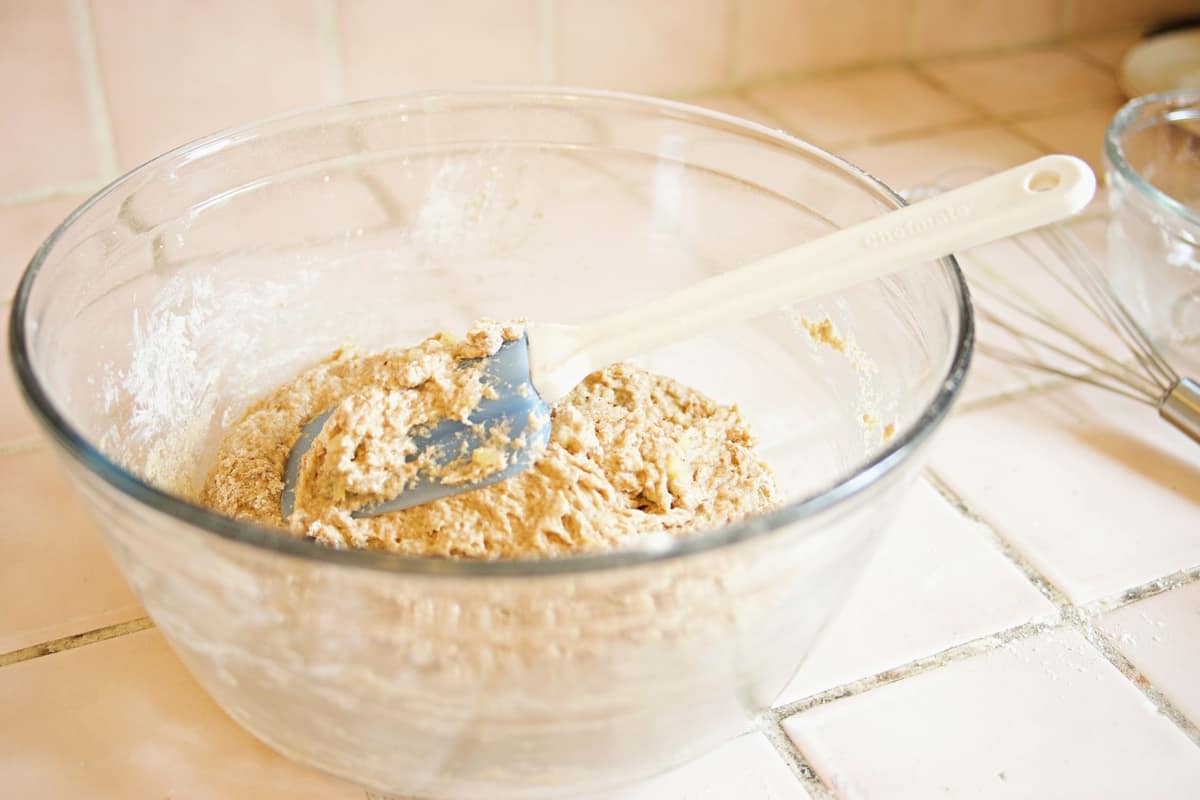
What it is
Air whipped into cream or egg whites lives in fragile bubbles that vigorous stirring destroys. Folding replaces the stir with a scoop-and-turn motion: the spatula cuts down through the centre, sweeps along the bottom of the bowl, and lifts the heavier mixture up and over the lighter one, with a quarter turn of the bowl between strokes. The goal is the fewest, gentlest passes that still combine everything.
Why it matters
In mousses, soufflés, chiffon cakes and macarons, that trapped air is the leavening. Stir instead of fold and you deflate the very structure the recipe depends on — the result sets dense and heavy rather than light.
Common mistakes
Stirring in circles, folding for too long in pursuit of a perfectly uniform batter, and dumping all the light mixture in at once. A few faint streaks are usually better than an over-folded, deflated mix, and loosening the heavy base with a small portion of the light one first makes the rest fold in far more easily.
Related terms
Frequently Asked Questions
What does 'gently fold' mean in a recipe?
It means combine without deflating. Use a flexible spatula to cut down through the mixture, sweep along the bottom, and lift it up and over the top, rotating the bowl between strokes. It is deliberately slower and lazier-looking than stirring — and that's the point.
Folding vs stirring — what's the difference?
Stirring moves everything in circles and shears through air bubbles, which is fine for batters that don't rely on whipped-in air. Folding lifts and layers instead of shearing, preserving the bubbles. If a recipe whipped something to peaks first, it almost certainly wants folding afterwards.
How do I know when to stop folding?
Stop as soon as no large pockets of unmixed ingredient remain — a few thin streaks are acceptable and usually disappear during pouring. Every extra stroke costs air, so err on the side of stopping early.
Tastethetechnique
Everything in our kitchen is baked fresh to order — eggless and vegan variants available.