Blooming Gelatin
Blooming gelatin means softening it in cold liquid before it's dissolved into a warm mixture. The dry protein absorbs the liquid and swells, so it later melts in smoothly instead of seizing into rubbery lumps. It's the essential first step behind panna cotta, mousses and mirror glazes — wherever gelatin sets a dessert.
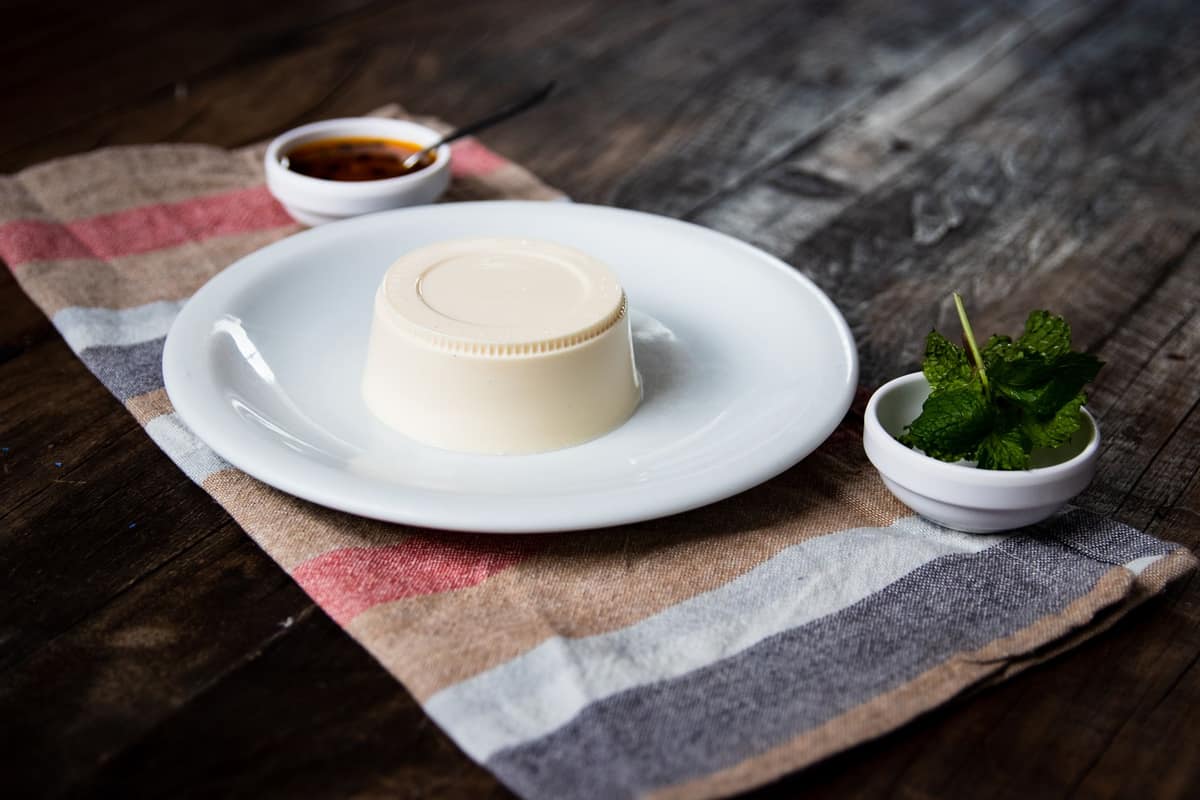
What it is
Gelatin is a dried animal protein that cannot go straight into warm liquid — the outside gels instantly into a waterproof skin while the inside stays hard, leaving gritty lumps that never dissolve. Blooming solves this: sheets are soaked in cold water until floppy and then squeezed out, while powder is sprinkled over cold liquid and left to swell into a translucent sponge. Bloomed gelatin then melts evenly into gentle warmth.
Why it matters
Everything gelatin does — the wobble of panna cotta, the body of a mousse, the gloss of a mirror glaze — depends on it dissolving completely and evenly. Skipped or rushed blooming shows up as rubbery flecks, an uneven set, or a dessert that never firms properly. Heat discipline matters too: boiling weakens gelatin's setting power, so it's melted with warmth, never cooked.
The vegetarian question
Gelatin is derived from animal collagen, which makes it unambiguously non-vegetarian — in India, anything containing it carries the red-brown non-veg mark under FSSAI rules, a detail many imported dessert recipes quietly ignore. The plant-based counterpart is agar-agar, extracted from seaweed: it sets firmer and less wobbly, behaves differently in the kitchen, and needs its own handling — but it opens gelatin-style desserts to vegetarians. At LME we avoid gelatin entirely and build our set desserts on vegetarian alternatives.
Related terms
Frequently Asked Questions
What does it mean to bloom gelatin?
It means softening gelatin in cold liquid before use — soaking sheets until floppy, or letting powder swell over cold liquid. Bloomed gelatin dissolves smoothly into warm mixtures; unbloomed gelatin seizes into lumps that never fully melt.
Is gelatin vegetarian?
No. Gelatin is made from animal collagen, so it's non-vegetarian — in India, products containing it must carry the non-veg marking under FSSAI rules. Vegetarians can use agar-agar, a seaweed-derived setting agent, though it sets firmer and handles differently.
Sheet gelatin vs powdered gelatin — what's the difference?
They're the same protein in different forms. Sheets are soaked in cold water, squeezed and melted in, and are prized for dissolving cleanly without adding extra liquid. Powder blooms in a measured amount of cold liquid that then joins the recipe. Professionals tend to prefer sheets; both work when bloomed properly.
Tastethetechnique
Everything in our kitchen is baked fresh to order — eggless and vegan variants available.