Mousse
Mousse is a foam persuaded to become dessert: a flavoured base — chocolate, fruit or custard — made light with whipped cream or whipped eggs, then set so the air is locked in. Its character comes from the base; its magic from the bubbles. Mousses range from spoonable cups to firm layers engineered for slicing inside entremets.
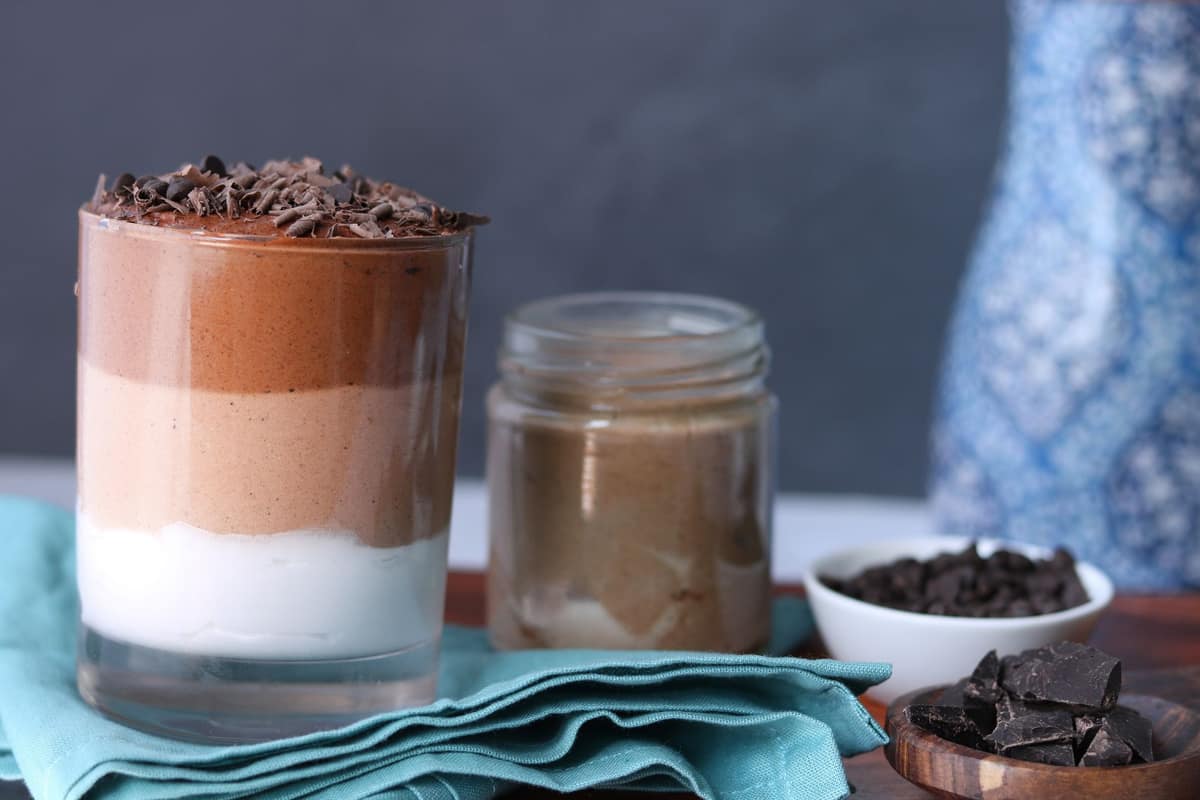
Unlocks
What it is
Every mousse has two halves: a flavour base and an aerator folded through it. Pastry kitchens think in four broad base families — a sabayon of whipped warm yolks, a ganache of chocolate and cream, a fruit purée, or a pâte à bombe of yolks whipped with hot syrup. The aerator is usually whipped cream, sometimes meringue. Fold the two together gently and the foam holds.
Why it matters
Aeration transforms flavour. The same chocolate that feels dense as ganache turns weightless as mousse because the bubbles dissolve richness across the tongue. Mousse is also the structural core of modern entremets — a mousse firm enough to slice cleanly is what lets a layered cake hold sponge, crunch and cream in one architecture.
Setting: gelatin and the vegetarian question
A mousse that must hold a shape is usually set with bloomed gelatin — which is animal-derived and therefore off the table for many Indian vegetarians. Chocolate mousses can often set on cocoa butter alone, and plant-based setting agents like agar exist, each with its own texture. It is always worth asking how a mousse is set; eggless and vegan variants are available where kitchens design for them.
Common mistakes
Folding is where mousses die. A base that is too warm melts the whipped cream and the mousse turns to soup; too cold and it seizes into lumps before the aerator is through. Overfolding knocks out the air you worked to create. A finished mousse should look uniform, glossy and visibly airy — streaks or puddles mean the marriage failed.
Related terms
Frequently Asked Questions
What are the main types of mousse?
By base, four broad families: sabayon-based (whipped warm egg yolks), ganache-based (chocolate and cream), fruit-based (purée), and pâte à bombe-based (yolks whipped with hot syrup). Whipped cream or meringue then provides the air, and gelatin or cocoa butter provides the set.
Is mousse vegetarian?
It depends on two things: eggs in the base and gelatin in the set — both non-vegetarian by Indian FSSAI convention. Chocolate mousses set on cocoa butter, or fruit mousses set with agar, can be fully vegetarian, so eggless and vegan variants are available where relevant. Always worth asking the bakery.
Why is my mousse runny or lumpy?
Runny mousse usually means the base was too warm when the whipped cream went in and melted the foam, or the setting agent was skipped or under-bloomed. Lumps mean the base was too cold, or gelatin seized on contact. Temperature discipline at the folding stage is nearly the whole craft.
Tastethetechnique
Everything in our kitchen is baked fresh to order — eggless and vegan variants available.