Entremet
/AHN-truh-may/
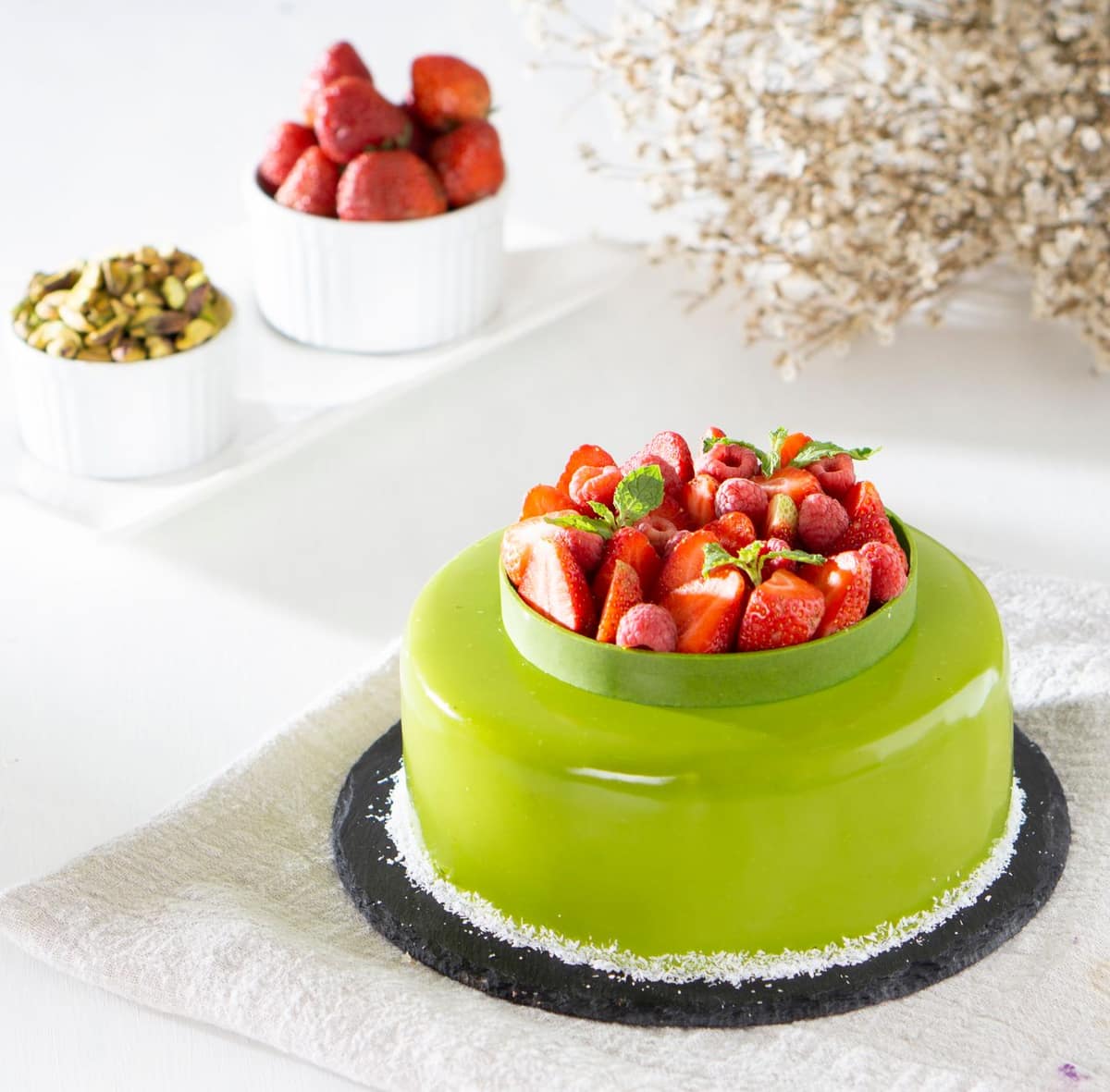
An entremet is the layered mousse cake of modern French patisserie: a mousse body encasing an arrangement of sponge, fruit insert, crunch layer and cream, finished with a glaze or velvet spray. Every layer is engineered to contribute a distinct texture, so one slice moves from crisp to creamy to airy in a single bite.
Builds on
Unlocks
What it is
An entremet is built in reverse, inside a mould: mousse is piped in first, inserts of set fruit cream or compote and a thin sponge like joconde are pressed into it, a crisp base layer goes on last, and the whole thing is frozen solid before being unmoulded and glazed. Freezing is not a shortcut — it is what makes the clean geometry and mirror finish possible.
Why it matters
Entremets are texture architecture. Where a classic layer cake repeats sponge and cream, an entremet deliberately opposes textures — a crackling base against a cloud of mousse, a sharp fruit centre against sweet cream — and balances them so no single element dominates. It is the discipline that most clearly separates patisserie from home baking: composition, not decoration.
Common mistakes
The usual failures are structural. A mousse too soft to slice turns the cake into a puddle; inserts placed off-centre show up the moment it is cut; a base layer that absorbs moisture loses the crunch that justified its existence. And glazing a cake that is not thoroughly frozen ruins the finish — the glaze slides or melts the surface it was meant to mirror.
Frequently Asked Questions
What is the difference between an entremet and a regular cake?
A regular layer cake is mostly sponge with cream between; an entremet is mostly mousse, with thin sponge, fruit and crunch layers set inside it. It is assembled in a mould, frozen, then glazed — a construction process closer to engineering than to frosting a cake.
Why are entremets frozen during assembly?
Freezing sets each layer solid so the next can be added without mixing, lets the cake release cleanly from the mould with sharp edges, and gives mirror glaze the cold surface it needs to set into a thin, even coat. The cake is served thawed — the freezing is purely structural.
What layers does a typical entremet have?
Most follow a pattern: a crisp base for crunch, a thin sponge such as joconde for structure, one or two inserts — often a fruit cream or compote — for contrast, a mousse that binds everything, and a glaze or velvet finish. The exact combination is where each pastry chef expresses a point of view.
Tastethetechnique
Everything in our kitchen is baked fresh to order — eggless and vegan variants available.