Mirror Glaze
Mirror glaze is the glossy, reflective coating poured over frozen entremets — typically built from chocolate or cocoa, sweetened condensed milk or cream, sugar and bloomed gelatin. Poured at just the right warmth over a deeply chilled cake, it sets into a thin, even skin so shiny you can see yourself in it.
Builds on
Unlocks
What it is
A mirror glaze is essentially a gelatin-set chocolate syrup engineered for shine. The gelatin gives it a flexible, glass-smooth set; the sugars and dairy give body and gloss. It is always poured, never spread — the glaze must flow over the cake in one pass and self-level, because any touch of a spatula on the surface leaves a scar in the mirror.
Why it matters
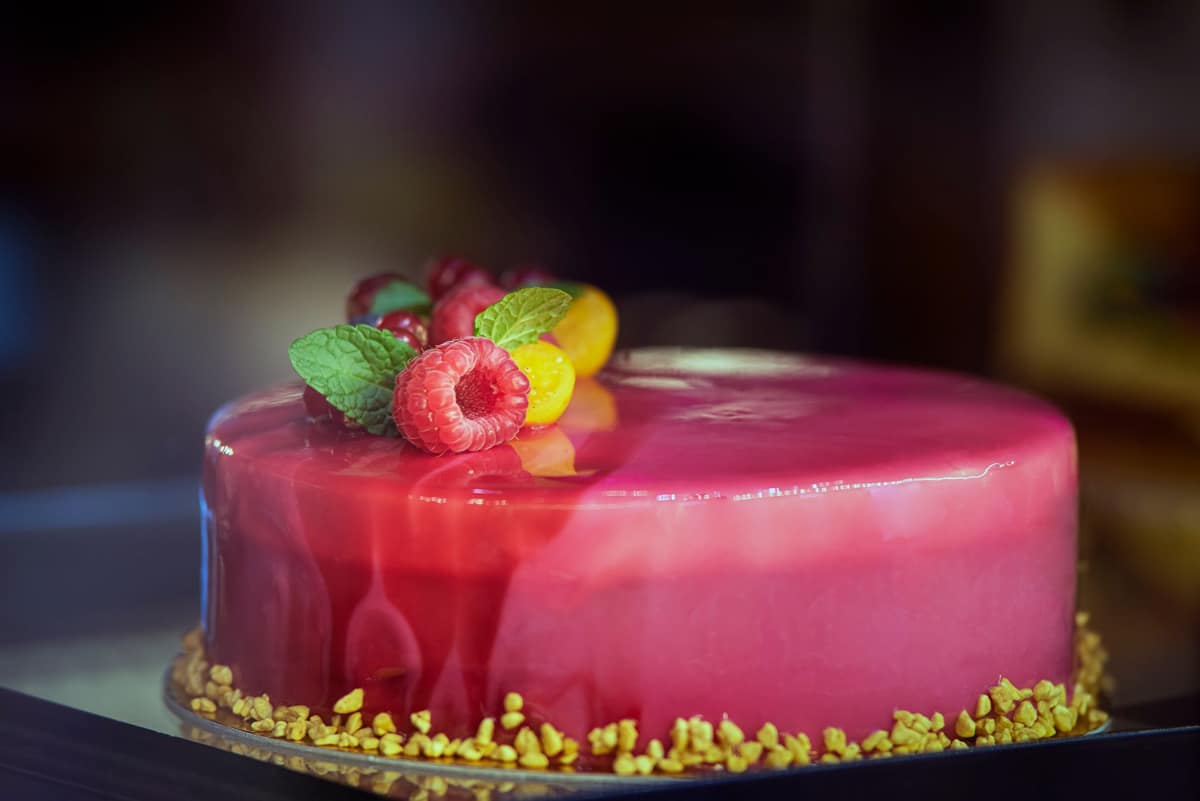
The glaze is why entremets photograph the way they do: a still, reflective surface that reads as liquid even after it sets, taking colour and marbling dramatically. But it is functional too — it seals the mousse beneath, slowing drying and protecting delicate layers. It has become the signature finish of modern patisserie, the visual promise of what is engineered inside.
Common mistakes
Everything hinges on the meeting of a warm glaze and a properly frozen cake — a discipline of degrees, judged with a thermometer and experience. Glaze poured too warm melts the mousse and slides off in sheets; too cool, it sets in thick, ropey drips before it can level. Bubbles whisked in during mixing show up as craters in the mirror, which is why glazes are blended gently and rested before pouring.
Related terms
Frequently Asked Questions
What is mirror glaze made of?
Most versions combine chocolate or cocoa, sugar, condensed milk or cream, and bloomed gelatin, sometimes with neutral glaze for extra clarity. The gelatin is what gives the thin, flexible, high-shine set — which also makes classic mirror glaze non-vegetarian; agar-based versions exist with a slightly different finish.
Why must the cake be frozen before glazing?
The cold surface sets the warm glaze on contact, freezing it into a thin, even, glassy layer. On a merely chilled cake the glaze stays fluid too long, runs off the sides and pools at the base — and it can soften the mousse underneath as it lingers.
Why is my mirror glaze dull or bubbly?
Dullness usually means the glaze was poured at the wrong warmth or the cake surface was frosted with ice crystals rather than smooth. Bubbles come from aggressive mixing — a mirror glaze is blended gently, strained and rested so trapped air can escape before the pour.
Tastethetechnique
Everything in our kitchen is baked fresh to order — eggless and vegan variants available.