Italian Meringue
Italian meringue is made by streaming hot sugar syrup into egg whites as they whip. The syrup's heat cooks the whites while the whisk builds the foam, producing the densest, glossiest and most stable of the three classic meringues — and one that's safe to eat without further baking.
Builds on
Unlocks
What it is
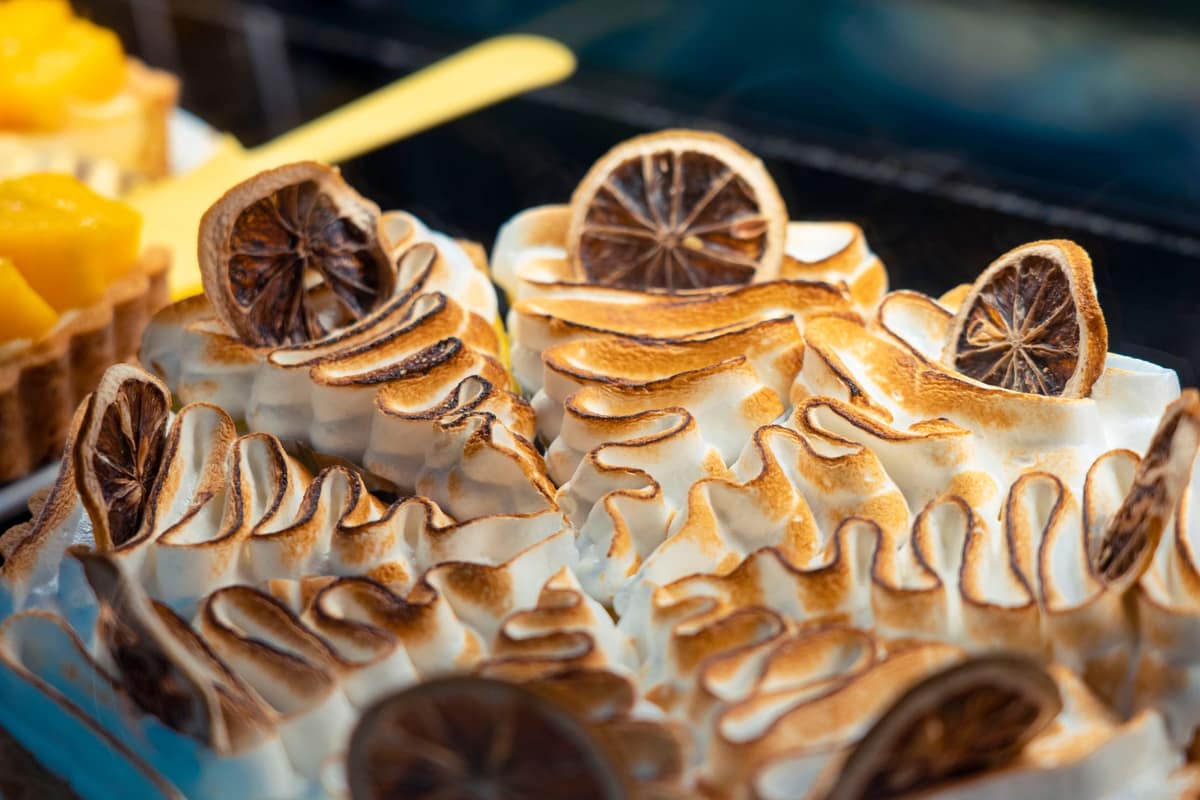
Sugar and water are boiled to a precise syrup stage, then poured in a thin stream down the side of the bowl into whites that are already whipping. The hot syrup does two jobs at once: it dissolves seamlessly into the foam, and its heat sets the egg proteins as they stretch around the air bubbles. The result is a thick, marshmallowy meringue with a lacquered shine that holds its shape for hours.
Why it matters
Because the whites are cooked by the syrup, Italian meringue can be used as-is — piped onto tarts and torched, folded into mousses and frozen parfaits, or beaten with soft butter to become Italian meringue buttercream, the silkiest and most stable of the buttercreams and a favourite for wedding cakes in warm climates. Where French meringue would weep or slump, Italian holds.
Common mistakes
Pouring the syrup onto the moving whisk, which flings threads of hardened sugar onto the bowl instead of into the foam — aim the stream down the bowl's side. Mistiming the two halves so the syrup is ready long before the whites, or vice versa. And rushing the final whipping: the meringue should be whipped until the bowl no longer feels hot before it meets butter, or the buttercream melts on contact.
Frequently Asked Questions
What makes Italian meringue different from French or Swiss?
The sugar goes in as a boiling syrup rather than as crystals or a gently warmed mixture. The syrup's heat cooks the whites during whipping, so Italian meringue is the most stable of the three and safe to use without baking — at the cost of being the most technical to make.
Is Italian meringue safe to eat without baking?
Yes — that's one of its main advantages. The hot syrup heats the whites enough to cook them as the foam builds, which is why Italian meringue tops lemon tarts, fills mousses and becomes buttercream without ever seeing the oven.
Why is Italian meringue used for buttercream?
Its density and stability make it the ideal skeleton for butter. Whipping soft butter into cooled Italian meringue gives a buttercream that is silky, light and far more heat-tolerant than simple whipped icings — a real consideration for tiered and wedding cakes in Indian weather.
Tastethetechnique
Everything in our kitchen is baked fresh to order — eggless and vegan variants available.