Meringue
Meringue is a foam of egg whites whipped with sugar until glossy and stiff. The whites' proteins build walls around whipped-in air while sugar stabilises and sweetens the structure. It appears three classic ways — French (raw sugar whipped in), Swiss (warmed over water first) and Italian (cooked with hot syrup) — each with its own stability.
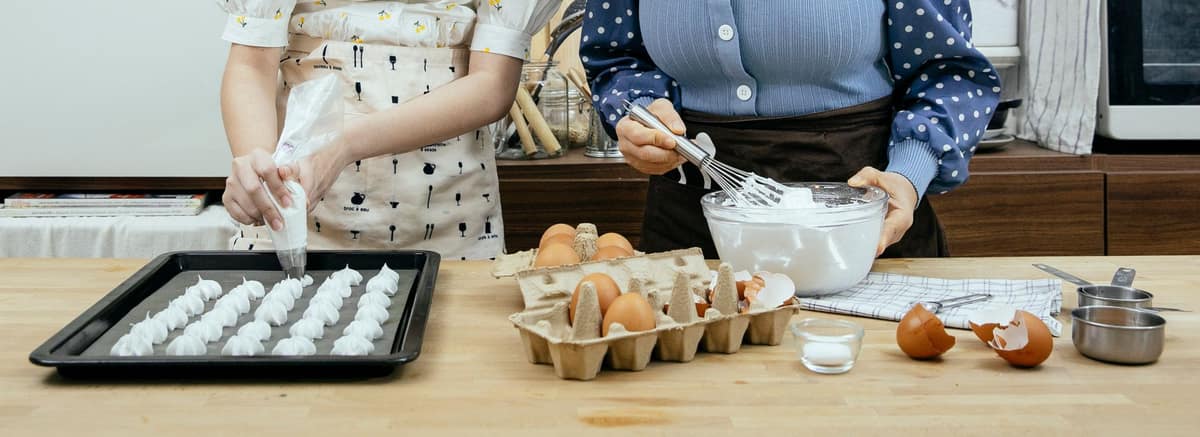
What it is
Whipping unravels egg-white proteins so they wrap around air bubbles; dissolved sugar thickens the bubble walls and holds the foam. The French style whips sugar straight into raw whites and is the lightest but least stable. Swiss meringue gently warms whites and sugar together before whipping, giving a denser, silkier foam. Italian meringue, made by streaming hot sugar syrup into whipping whites, is the sturdiest of the three.
Why it matters
Meringue is one of pastry's great multipliers: it becomes crisp shells and pavlova, the airy lift in macarons and soufflés, billowy pie toppings, and the base of silky buttercreams. Which style you choose decides how stable the result is — and whether the whites end up cooked.
Common mistakes
Any trace of fat — a smear of yolk, a greasy bowl — stops whites from foaming properly, so start scrupulously clean. Adding sugar too early or too fast can collapse the foam before it builds. And humidity is meringue's great enemy: sugar pulls moisture from damp air, turning crisp meringues sticky and weepy, which makes Bangalore's monsoon months a genuinely hard season for them.
Frequently Asked Questions
French vs Swiss vs Italian meringue — what's the difference?
The difference is how the sugar meets the whites. French whips raw sugar into raw whites — lightest, least stable. Swiss warms whites and sugar together before whipping — silkier and denser. Italian streams hot syrup into whipping whites — the most stable, with whites cooked by the syrup's heat.
Why is my meringue weeping or sticky?
Usually humidity or undissolved sugar. Sugar is hygroscopic — it pulls water from moist air — so meringues made or stored in humid weather soften and weep. Grainy, undissolved sugar in the foam also releases syrupy beads later. Dry days and airtight storage are a meringue's best friends.
Is meringue vegetarian?
In the Indian sense, no — it's made from egg whites, and eggs are classed as non-vegetarian under FSSAI labelling. There is a plant-based route: aquafaba, the liquid from cooked chickpeas, whips into a remarkably similar foam and is the standard base for eggless and vegan meringue variants.
Tastethetechnique
Everything in our kitchen is baked fresh to order — eggless and vegan variants available.