The Maillard Reaction
/my-YAR/
The Maillard reaction is the browning that happens when proteins and sugars meet under heat, producing the crust on bread, the toasted notes in biscuits, and the golden top of a cake. Unlike caramelisation, which is sugar transforming alone, Maillard needs protein too — and it creates an even wider spectrum of savoury, roasted, malty flavours.
Unlocks
What it is
Named after the French chemist who first described it, the Maillard reaction is a cascade of chemical events between amino acids — the building blocks of protein — and certain sugars. Under the dry heat of an oven it generates both brown pigments and an enormous range of aroma compounds: toasty, nutty, malty, roasted. It is the same chemistry behind coffee roasting, toasted nuts and seared food.
Why it matters
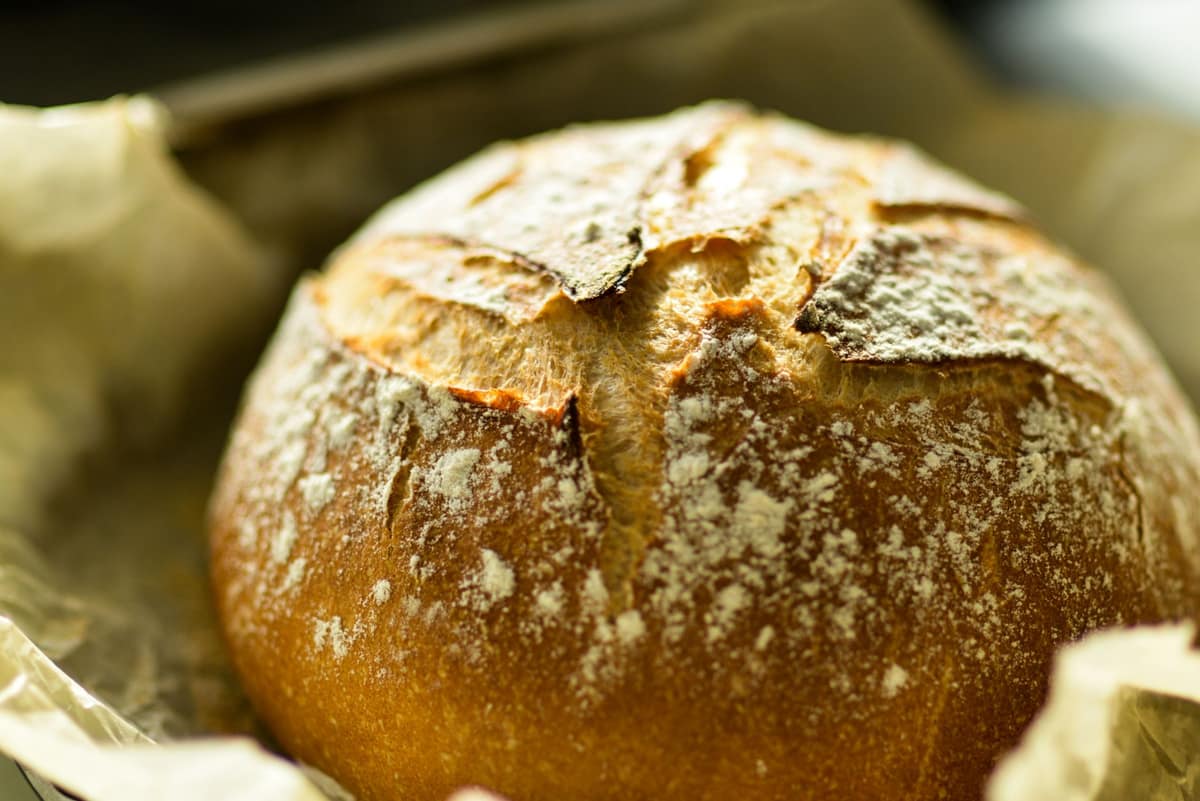
Golden equals flavour, quite literally. A pale loaf and a deeply baked one are different foods: the bold crust carries most of a bread's roasted, complex character, which is why artisan bakers push loaves darker than supermarket bread ever goes. In pastry, the difference between blond and burnished shows up as the difference between bland and remarkable.
Maillard vs caramelisation
They are cousins that often work side by side. Caramelisation is sugar breaking down on its own, and needs fiercer heat; Maillard needs both protein and sugar and gets going at gentler oven heat. A bread crust is mostly Maillard; a caramel sauce is pure caramelisation; a golden croissant enjoys both at once.
Common mistakes
Underbaking out of caution is the big one — pulling bread or pastry at pale gold leaves flavour still locked in the oven. Excess surface moisture also stalls browning, since the reaction wants a dry, hot surface; that is why steam is vented late in a bread bake and why wet doughs brown more slowly at first.
Related terms
Frequently Asked Questions
What is the difference between the Maillard reaction and caramelisation?
Caramelisation involves only sugar breaking down under high heat. The Maillard reaction is a conversation between proteins and sugars, happens at gentler heat, and produces more savoury, roasted flavours. Bread crust is chiefly Maillard; a pan of caramel is pure caramelisation.
How do you pronounce Maillard?
It is French: roughly "my-YAR", with the stress on the second syllable and the final consonant left silent. It is named after Louis-Camille Maillard, the chemist who described the reaction in the early twentieth century.
Why does my bread stay pale and not brown properly?
Usually the surface never got hot and dry enough, or the dough had little sugar left after a very long fermentation. Too-gentle oven heat, overcrowding, or excess steam late in the bake all stall browning. A hotter, drier finish generally deepens both colour and flavour.
Tastethetechnique
Everything in our kitchen is baked fresh to order — eggless and vegan variants available.