Banneton
/BAN-uh-ton/also called proofing basket
A banneton, or proofing basket, is a coiled cane basket that holds shaped bread dough during its final rise. It supports soft, high-hydration doughs that would otherwise slump sideways, wicks a little moisture from the surface for a better crust, and leaves the signature spiral flour rings on rustic loaves.
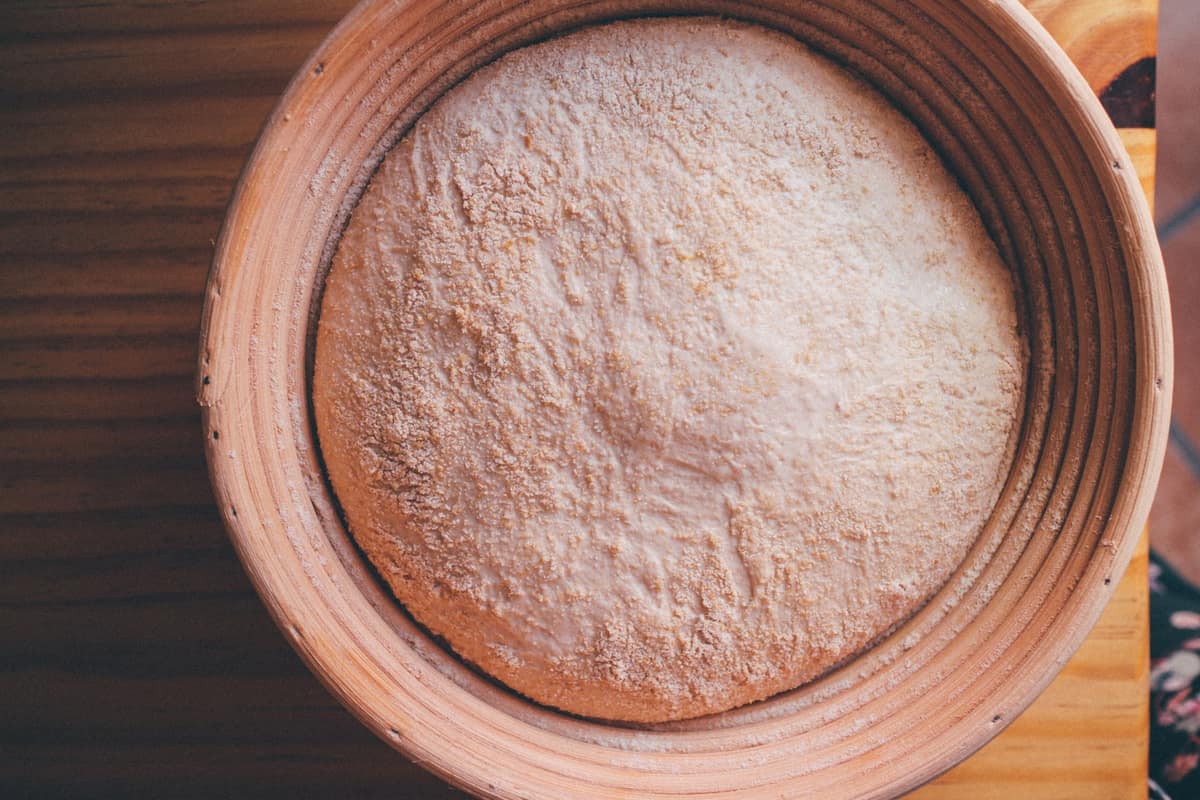
What it is
A banneton is traditionally woven from coiled rattan cane, sometimes lined with a linen cloth. The shaped, floured dough goes in for its final proof and is turned out just before baking — the basket never goes in the oven. The coils give the basket its ridged inner walls, and it is those ridges, printed in flour onto the dough, that become the spiral rings you see on artisan sourdough.
Why it matters
Wet, well-fermented doughs are wonderfully extensible but structurally lazy: left to proof on a flat tray, they relax outward into a puddle rather than rising upward. The basket walls hold the loaf's shape so all that fermentation energy pushes up, not out, giving a taller loaf with a more open crumb. The cane also breathes, drawing a touch of moisture off the surface, which helps the crust blister and crisp in the oven.
Common mistakes
Under-flouring the basket is the heartbreaker — a sticky dough welds itself to the cane and tears on the way out, deflating in the process. Rice flour clings better than wheat flour for dusting, especially in humid Bangalore weather where dough surfaces stay tacky. Never wash a banneton with soap; brush it out, let it dry thoroughly, and the seasoned flour coating only improves. And do not proof in it unfloured 'just once' — that is how baskets are ruined.
At Love Made Edible
Every LME sourdough loaf takes its final rise in a cane banneton — the spiral flour rings on the finished crust are the basket's fingerprint, not decoration we add afterwards.
Related terms
Frequently Asked Questions
Do I really need a banneton to bake sourdough at home?
No — it helps, but it is not essential. A medium mixing bowl lined with a clean, generously floured cotton or linen cloth does the same structural job: it holds the shaped loaf upright through its final rise. You will not get the spiral rings, but the loaf will bake up just as tall.
How do you clean a banneton?
Mostly, you don't — and certainly never with soap or a soak. Knock out the loose flour, brush the coils with a dry stiff brush, and let the basket air-dry completely before storing it. In humid weather, an occasional short spell in a warm switched-off oven keeps it dry and stops any mustiness.
Why does sourdough have spiral rings on the crust?
Those rings are the imprint of the banneton's coiled cane walls. The basket is dusted with flour before the shaped dough goes in, and as the loaf rests against the coils the flour transfers in rings. Turned out and baked, the pattern toasts into the crust — a signature of basket-proofed bread.
Tastethetechnique
Everything in our kitchen is baked fresh to order — eggless and vegan variants available.