Emulsion
An emulsion is a smooth, stable blend of two things that would normally refuse to mix — usually fat and water — coaxed together into one uniform mixture. Ganache, buttercream, custard and mayonnaise are all emulsions. When one splits or breaks, the fat and water have separated again, and the mixture turns greasy or curdled.
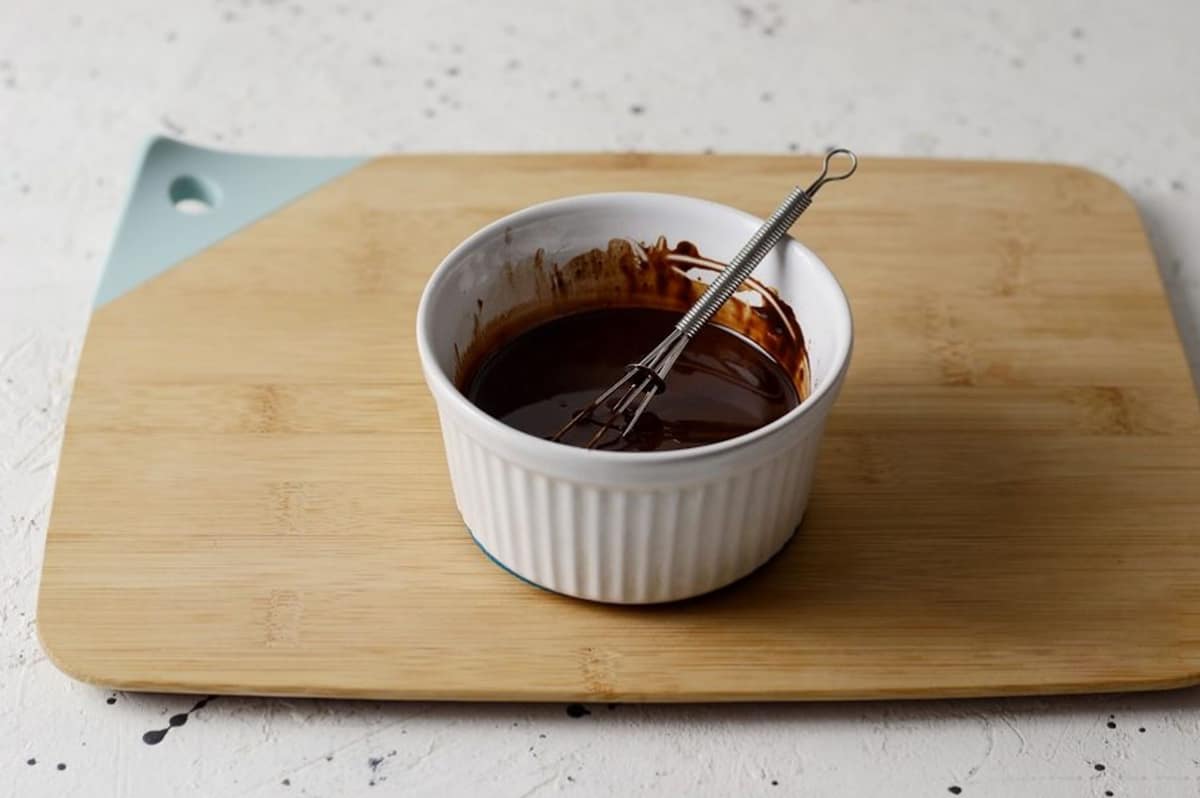
What it is
Fat and water are natural enemies — pour oil into water and it beads up and floats away. An emulsion tricks them into coexisting by breaking one into droplets so fine they stay suspended in the other, held apart by an emulsifier such as egg yolk or the milk solids in chocolate. The result reads as a single creamy substance, even though two warring ingredients are locked inside it.
Why it matters
A huge amount of pastry is emulsion in disguise. Ganache is chocolate's fat emulsified into cream; buttercream is fat whipped through a water-based base; custard and crème pâtissière hold fat, water and egg in silky suspension. Get the emulsion right and these feel glossy, smooth and stable; get it wrong and they turn oily, grainy or weepy no matter how good the ingredients were.
Common mistakes
Most breaks come from adding things too fast or at the wrong temperature — pouring cold cream into hot chocolate, or beating butter that is too warm into a base. The mixture goes from glossy to grainy, oily or curdled. The good news is that a split emulsion is usually rescuable: a splash of warm liquid whisked in patiently, or a spell of gentle warming or cooling, often coaxes the droplets back into suspension.
Related terms
Frequently Asked Questions
What is an emulsion in baking?
An emulsion in baking is a stable mixture of fat and a water-based liquid that would ordinarily separate, held together as fine suspended droplets. Ganache, buttercream and custard are everyday examples. An emulsifier — often egg yolk or the natural solids in chocolate — is what keeps the two from splitting apart.
Why did my ganache split?
Usually a temperature or speed problem. Cream and chocolate combined when one is too hot or too cold, or stirred too aggressively, can force the fat out of suspension so the ganache turns oily and grainy. It looks alarming but is often fixable with a little warm liquid, worked in gently until it comes smooth again.
Can you fix a broken emulsion?
Often, yes. A broken emulsion has simply let its fat and water separate, and coaxing them back together usually works: whisk in a small splash of warm liquid a little at a time, or warm or cool the mixture gently while stirring. Patience does more than force here — aggressive beating tends to make things worse.
Tastethetechnique
Everything in our kitchen is baked fresh to order — eggless and vegan variants available.