Chocolate Tempering
Chocolate tempering is the controlled melting and cooling of chocolate to guide its cocoa butter into one specific stable crystal form. Tempered chocolate sets glossy, snaps cleanly and releases from moulds; untempered chocolate sets dull, soft and streaky. It's the invisible discipline behind every professional chocolate finish.
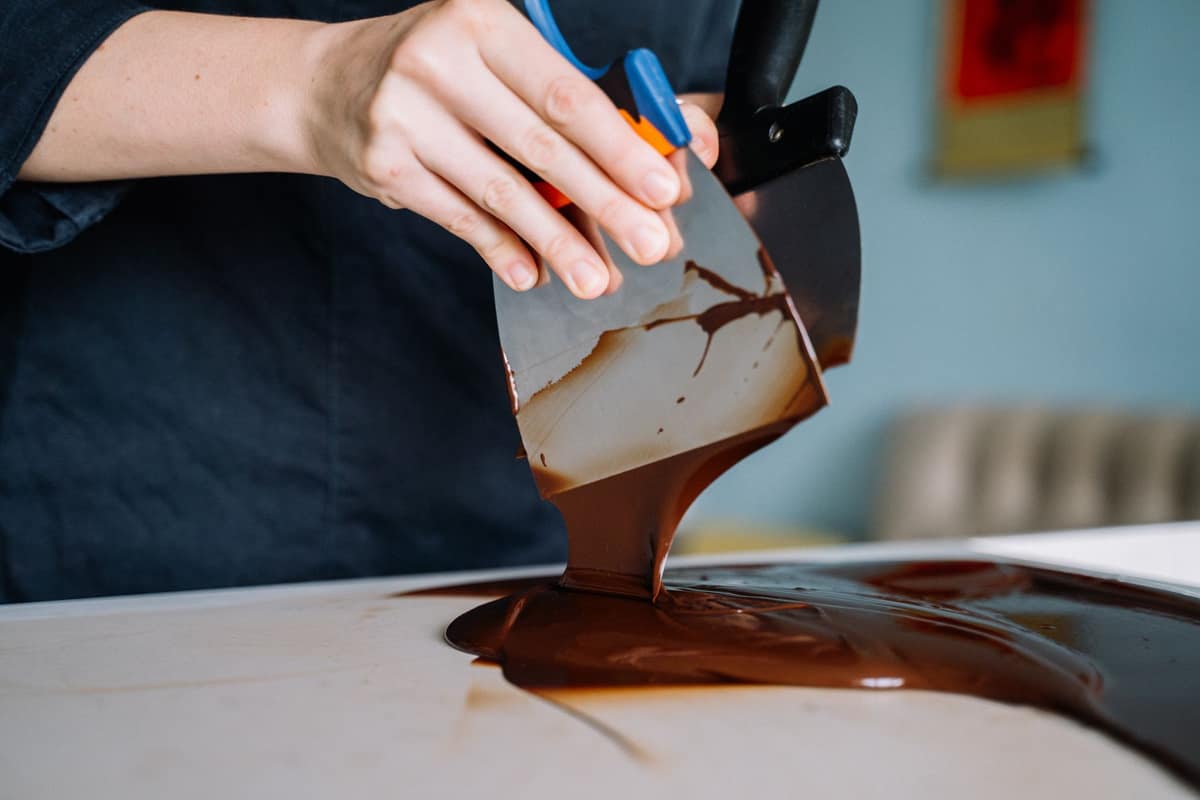
What it is
Cocoa butter is polymorphic — its fat can solidify into several different crystal structures, most of them soft, dull and unstable. Only one form gives the tight, orderly crystal lattice responsible for shine and snap. Tempering is the art of melting away all the crystals, then cooling and agitating the chocolate so that only the desirable form seeds and multiplies before the chocolate sets.
Why it matters
The right crystals change everything you notice about chocolate: a mirror gloss instead of a matte grey, a crisp snap instead of a bend, a clean release from moulds, and a melt that begins on the tongue rather than in the fingers. Well-tempered chocolate also stands up somewhat better to warm rooms — a small but genuine mercy in Bangalore, though no temper survives real heat.
Common mistakes
The tell-tale failure is bloom: dull grey streaks or a cloudy film where unstable crystals — or migrating sugar, in humid air — have surfaced. Bloomed chocolate is safe to eat and can simply be re-tempered. The other classic is water: even a drop makes melted chocolate seize into a grainy paste, so bowls and tools must be bone dry. Overheating scorches chocolate beyond rescue, which is why patience and gentle heat rule the whole process.
Related terms
Frequently Asked Questions
What does tempering chocolate mean?
It means melting and then carefully cooling chocolate so its cocoa butter crystallises in the one stable form that gives shine, snap and clean mould release. Skip it, and the chocolate sets soft, dull and streaked even though nothing about the flavour has changed.
Why has my chocolate turned grey and streaky?
That's bloom — either unstable fat crystals migrating to the surface after a failed temper or warm storage, or sugar drawn out by humidity. It looks alarming but the chocolate is perfectly safe to eat, and melting and re-tempering restores it completely.
Does tempered chocolate survive Indian heat better?
Somewhat. The stable crystal form resists softening better than untempered chocolate, so a good temper buys real margin in a warm room. But cocoa butter still melts well below Indian summer afternoon conditions, so cool storage matters regardless — temper is a helper, not armour.
Tastethetechnique
Everything in our kitchen is baked fresh to order — eggless and vegan variants available.