Chhena
/CHAY-nah/also called chenna, paneer's soft cousin
Chhena is a fresh Indian cheese made by curdling milk with an acid such as lemon or vinegar, then draining and kneading the soft curds until smooth. Moister and more tender than paneer, it is the base of Bengali sweets like roshogulla and sandesh, where French patisserie and Indian mithai quietly meet.
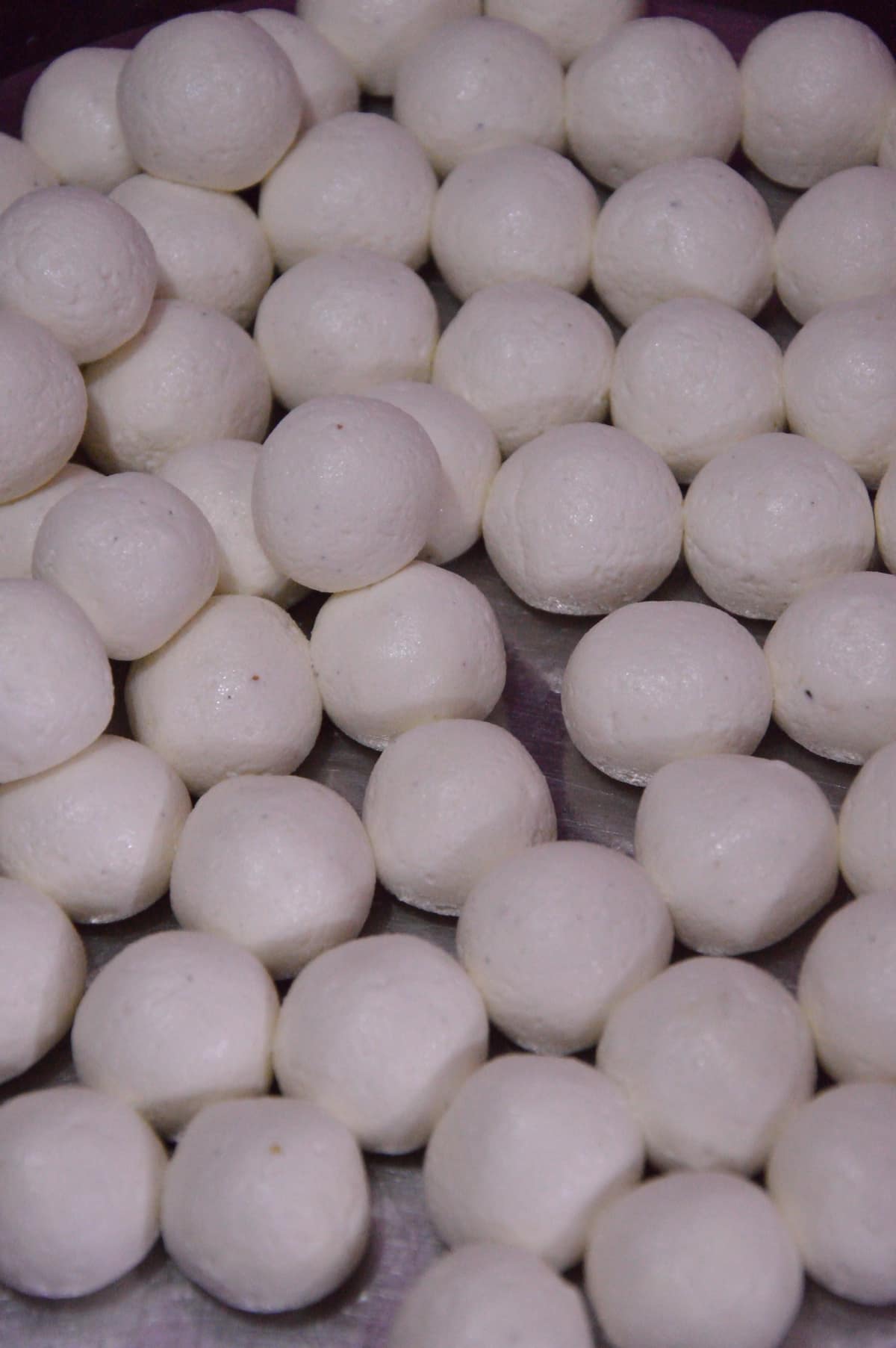
What it is
Chhena is made much like paneer, milk split with acid and the curds gathered, but it is drained less and never pressed firm. That leaves it soft, moist, and workable rather than sliceable. Fresh and mild, it is closer in spirit to a soft curd cheese than to a set block.
Why it matters
Chhena is the foundation of Bengal's most beloved sweets, from spongy roshogulla to delicate sandesh. It is also a lovely meeting point between traditions: a fresh, acid-set cheese much like the mascarpone or ricotta a French-trained baker knows, put to work in Indian mithai instead.
The craft of kneading
The real skill lies in kneading. Freshly drained chhena is grainy, and working it smooth with the heel of the hand, patiently and without overheating it, is what gives sandesh its silk and roshogulla its bounce. Under-kneaded chhena stays crumbly; overworked, it turns greasy and dense.
Related terms
Frequently Asked Questions
What is the difference between chhena and paneer?
Both are fresh acid-set cheeses, but chhena is drained less and never pressed, so it stays soft, moist, and easy to knead. Paneer is pressed firm enough to slice and cube. Chhena is made for sweets, paneer mostly for savoury cooking.
Is chhena vegetarian?
Yes. Chhena is made by curdling milk with a plant-based acid like lemon juice or vinegar, with no animal rennet, so it is suitable for vegetarians. It is a dairy product, so it is not vegan.
Tastethetechnique
Everything in our kitchen is baked fresh to order — eggless and vegan variants available.